










Case Study of Defect Detection on the Bottom Surface of Battery Shell Exterior Wall for Industrial Applications
Automotive & EV Battery
Aug 21,2026
I. Project Background
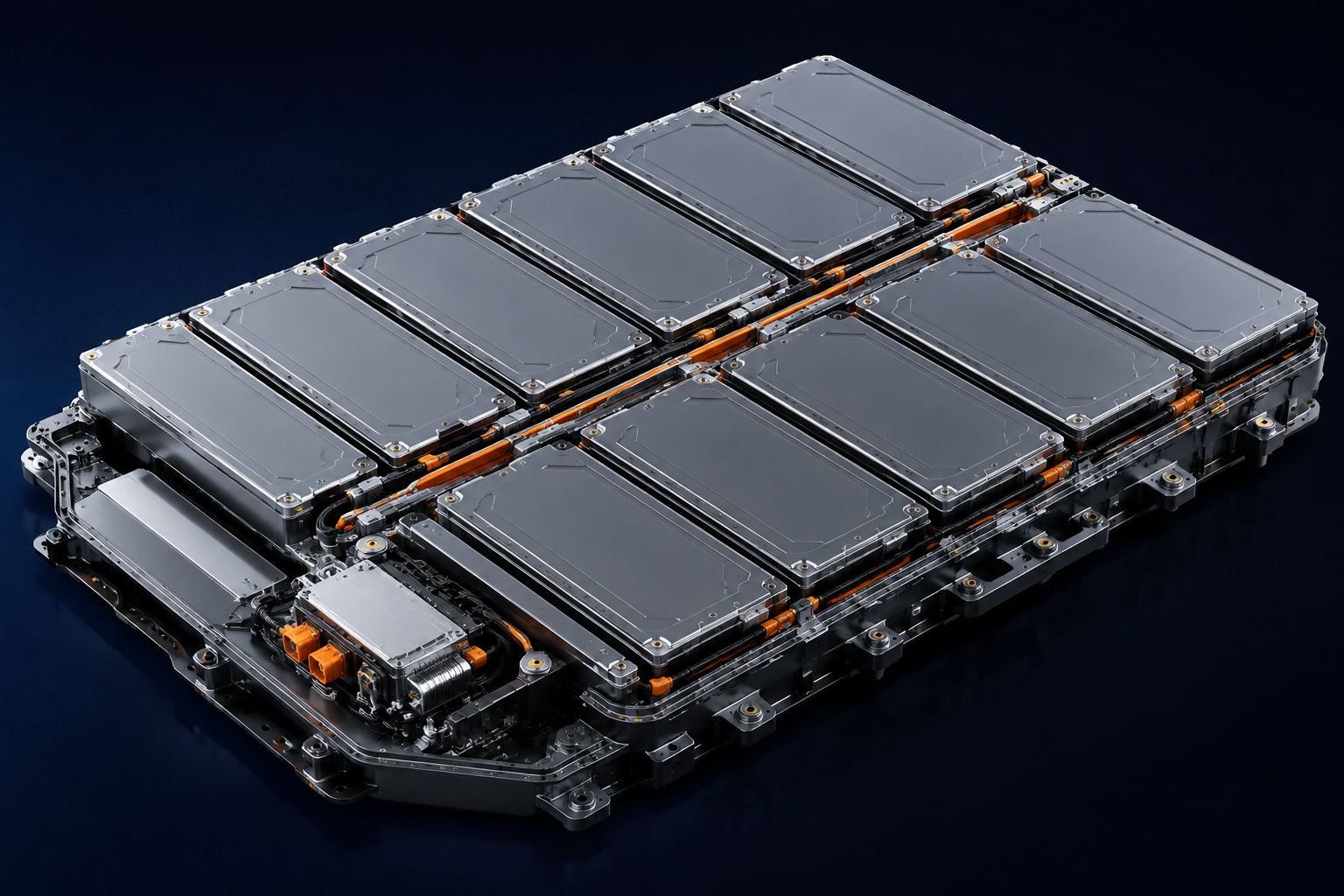
Driven by rapid‑growing echelon recycling and battery‑swap operation industries for new‑energy‑vehicle power batteries, scenarios involving disassembly, replacement and secondary reuse of power batteries keep expanding. During vehicle disassembly, transportation and handling, the bottom shell of batteries is highly susceptible to defects such as dents, bulges, impact‑induced deformation, wrinkles and abrasion. Structural deformation of the shell can directly damage the battery sealing system and create severe safety hazards including electrolyte leakage and thermal runaway.In battery‑swap workflows, enterprises need to objectively evaluate the residual service value of batteries and judge reusability based on defect locations and deformation magnitudes of battery housings.Conventional inspection approaches exhibit prominent drawbacks: manual visual inspection only catches obvious damage and cannot quantify dent depth or bulge height; subtle and gentle deformations are frequently missed. Ordinary 2D vision lacks height‑dimension information and fails to quantify 3D defect features. Inspection results heavily rely on subjective human judgement and cannot deliver standardized risk‑control references.To satisfy lightweight integration requirements for confined disassembly‑and‑assembly workstations, this project adopts the MT2009 compact line‑laser profiler to build a 3D on‑line inspection solution for battery bottom shells.
II. Product Selection: Core Compatibility Advantages of MT2009
In accordance with datasheet specifications and mechanical characteristics, this sensor is well‑suited for battery‑inspection operating conditions:
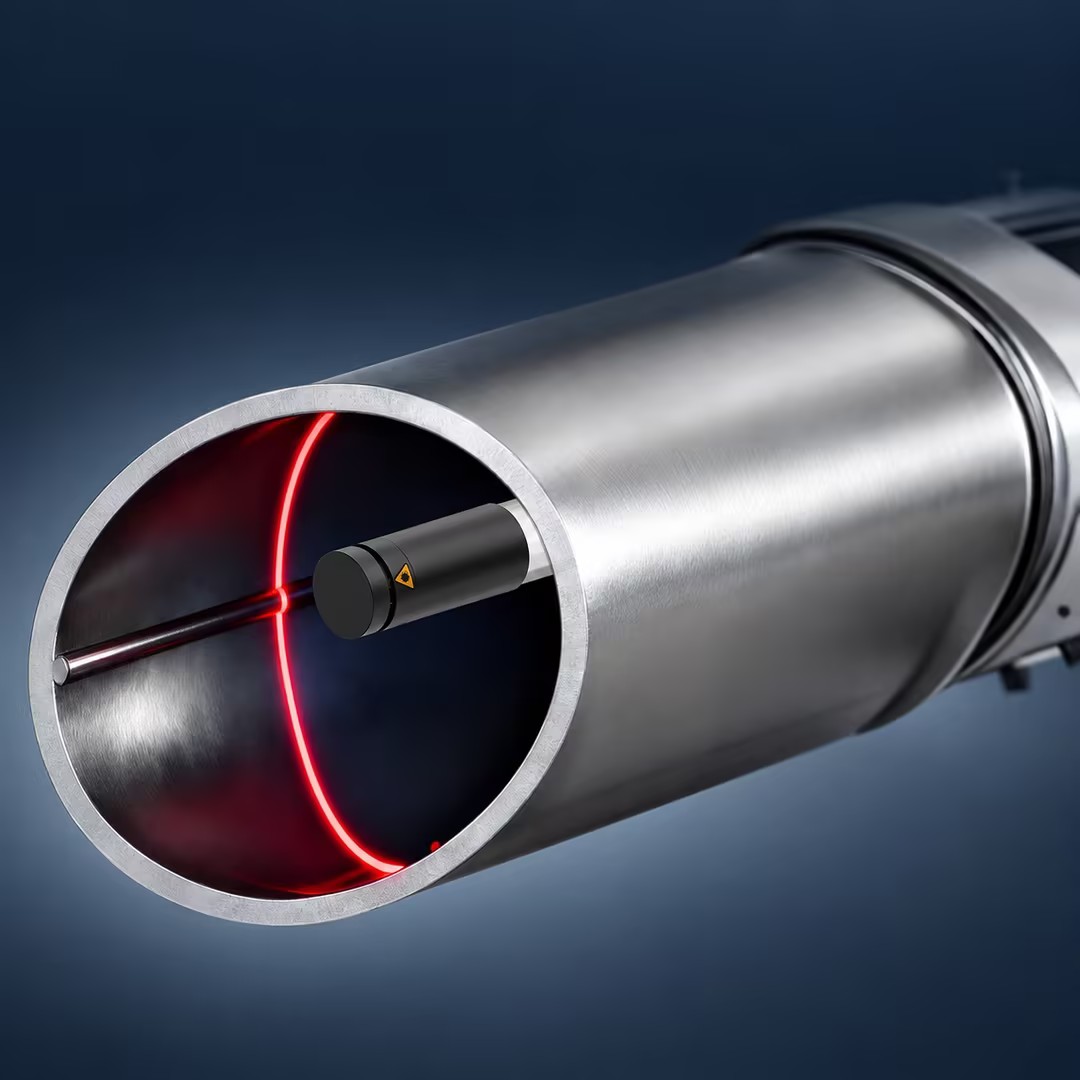
Ultra‑compact form for flexible installation in confined spacesWith dimensions of merely 86 × 44.5 × 26 mm, this highly integrated compact sensor can be mounted directly inside equipment cavities, tooling fixtures or robot end‑effectors. No large‑scale modification is required for battery‑swap stations. It meets low‑profile installation demands in narrow battery‑handling spaces and supports multiple mounting configurations such as fixed inspection benches and portable mobile tooling.
Short working distance to avoid spatial interferenceNominal working distance WD = 70 mm, which greatly reduces mechanical interference from mounting brackets and surrounding structures. Scanning can be performed in close proximity to battery shells for simpler installation and commissioning, ideal for near‑field inspection of battery bottom surfaces.
Adequate measuring range for full‑coverage scanning of battery bottom surfacesField‑of‑view along X‑axis FOV = 96 mm; Z‑axis measuring range ±40 mm (total 80 mm). It fully covers the bottom width of mainstream power batteries and captures height differences as well as deep or shallow deformations, enabling measurement of height‑related defects including dents, bulges and impact marks.
405 nm blue‑laser imaging for high definition on dark‑coloured housingsThe 405 nm blue laser delivers enhanced contrast on dark metallic power‑battery shells. It suppresses noise artefacts on glossy painted and matte surfaces and generates stable high‑quality point‑cloud data for faint scratches and mild deformations.
GigE Gigabit Ethernet for high‑speed stable data transmissionIndustrial‑grade GigE interface supports flexible cabling and high throughput. No data drift occurs during long‑duration continuous scanning. Full‑field point‑cloud data can be acquired at high speed to sustain stable assembly‑line operation. Dual output of contour X‑Z coordinates and intensity data facilitates algorithm‑driven defect analysis.
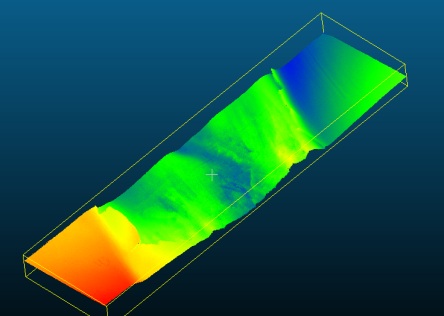
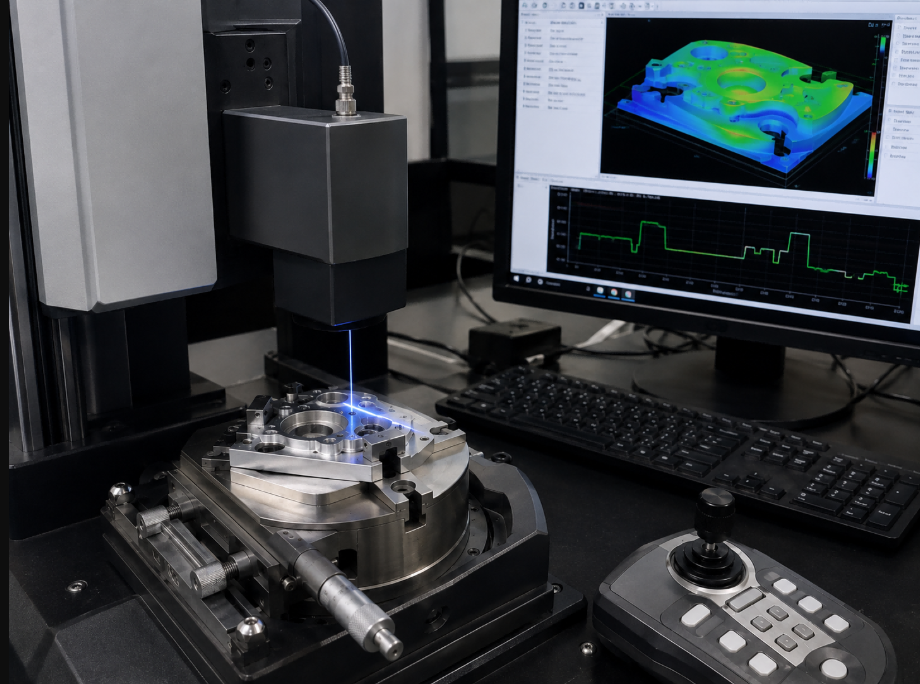
Laser triangulation principle for accurate 3D topography reconstructionBased on line‑laser triangulation, the sensor rapidly generates high‑precision 3D point clouds. Colour‑coded gradient cloud maps intuitively visualise height variations across the shell; bulges and dents are clearly distinguished, enabling reliable detection of subtle deformations invisible to the human eye.
III. Full On‑Site Inspection Workflow
Positioning and calibrationThe power battery is precisely positioned on the tooling platform. The MT2009 profiler is mounted above the battery. Datum‑plane calibration is completed and a reference template of standard shell contour is pre‑configured.
Fast full‑field scanningThe sensor moves at constant velocity to scan the entire outer bottom surface of the battery. 3D point‑cloud data is captured at high speed from close range, producing real‑time height‑encoded colour cloud maps that faithfully reconstruct the original shell topography.
Intelligent algorithm‑based defect analysisMeasured contours are automatically compared against the standard shell template. Defects including dents, bulges, wrinkles and impact damage are identified automatically. Quantified parameters such as defect area, maximum dent depth, bulge height and defect coordinates are calculated precisely.
Battery risk grading assessmentAutomatic risk classification is performed against customer‑specified reuse criteria using measured dimensional values:‑ Slight deformation with shallow depth and small coverage: Low risk. Re‑installation for normal service is permitted.‑ Moderate concave‑convex deformation over a large area: Medium risk. Usage is restricted to low‑load applications such as low‑speed vehicles and energy‑storage systems.‑ Severe impact damage and heavy tensile deformation: High risk. Re‑installation is prohibited; the battery shall be scrapped and disassembled.
Data archiving and traceabilityRaw point‑cloud files, defect dimension reports and risk‑grading outputs are archived automatically, providing objective digital evidence for battery traceability and after‑sales liability adjudication.
IV. Practical Application Benefits
Improved inspection accuracy eliminating omissions and misjudgements3D full‑field inspection replaces manual checking and 2D vision. Tiny hidden defects are visualised and digitally quantified. Subjective human bias is removed, effectively preventing safety accidents caused by re‑deploying damaged battery packs.
Light‑weight deployment with low modification costsThe compact unit fits scattered battery‑swap stations without extensive production‑line retrofits. It supports fixed‑line inspection as well as robot‑mounted dynamic scanning. Flexible deployment yields low capital investment and low ongoing maintenance expenditure.
High inspection throughput matching production‑line tact timeScanning and data processing for one battery bottom surface finish within several seconds. Fully automatic continuous operation outperforms manual work, enabling rapid batch screening of recovered swap‑batteries.
Standardised risk‑control for regulated battery echelon utilisationVague qualitative pass/fail judgements are converted to unified dimensional thresholds. A standardised battery‑reuse evaluation framework is established to support formalised management of battery recycling and battery‑swap businesses.
V. Application Expansion and Conclusion
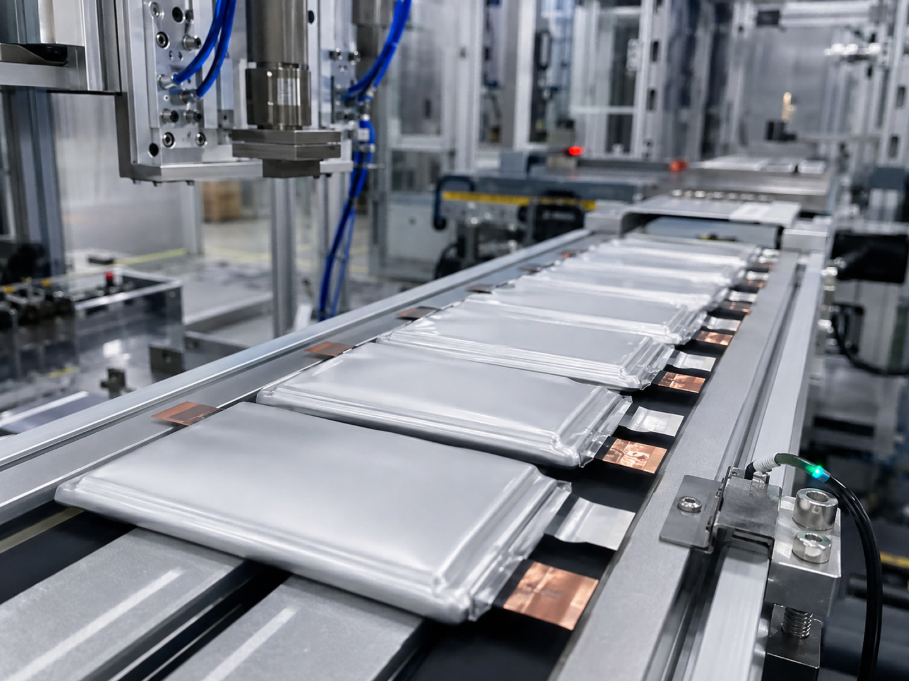
Beyond power‑battery bottom‑shell inspection, the MT2009 compact line‑laser profiler supports further applications: PACK module side‑wall inspection, cell flatness measurement, step‑height and warpage measurement for PCBs and photovoltaic cells, and robot end‑effector dynamic profile tracking.Against the backdrop of tightening safety regulations within the new‑energy industry, light‑weight compact 3D laser vision systems have become mainstream solutions for precision industrial quality control. Featuring small footprint, high‑fidelity imaging and robust industrial‑grade performance, the MT2009 is well adapted for quality‑inspection workflows of recycled power batteries. It delivers an efficient and reliable 3D‑inspection solution for structural testing, safety risk management and echelon utilisation of new‑energy batteries.